

Key Takeaways
- Subway tile earns its reputation because it adapts. The layout and grout colour do more work than the tile itself. You can make subway tile look completely different just by changing the pattern or the grout.
- Mosaics are the best tool for making a backsplash a focal point. They come in glass, natural stone, porcelain, ceramic, and metal. When used right, they become the first thing people notice in your kitchen.
- Encaustic tile does not need to cover the whole wall to make an impact. Even a strip behind the range adds character. The handcrafted look is built into the material itself.
- Large format tile is a maintenance decision as much as a design one. Fewer grout lines means less to clean. In a modern kitchen, that clean surface does a lot of work.
- Porcelain slabs give you the most seamless result available. No grout lines, one continuous surface, zero visual clutter. This is the right call when you want a kitchen that feels cohesive and easy to maintain.
When homeowners in Oakville, Burlington, and Mississauga start planning a kitchen renovation, the backsplash is often the last decision they think about. Then it becomes the one they second-guess the most. It sits right at eye level. It spans the most visible wall in the kitchen. It ties together the countertops, the cabinets, and the overall look in a way nothing else does.
Getting it right matters. So does knowing your options before you walk into a tile showroom.
Here are five backsplash tile options that come up regularly in GTA kitchens, what makes each one worth considering, and where each one fits best.
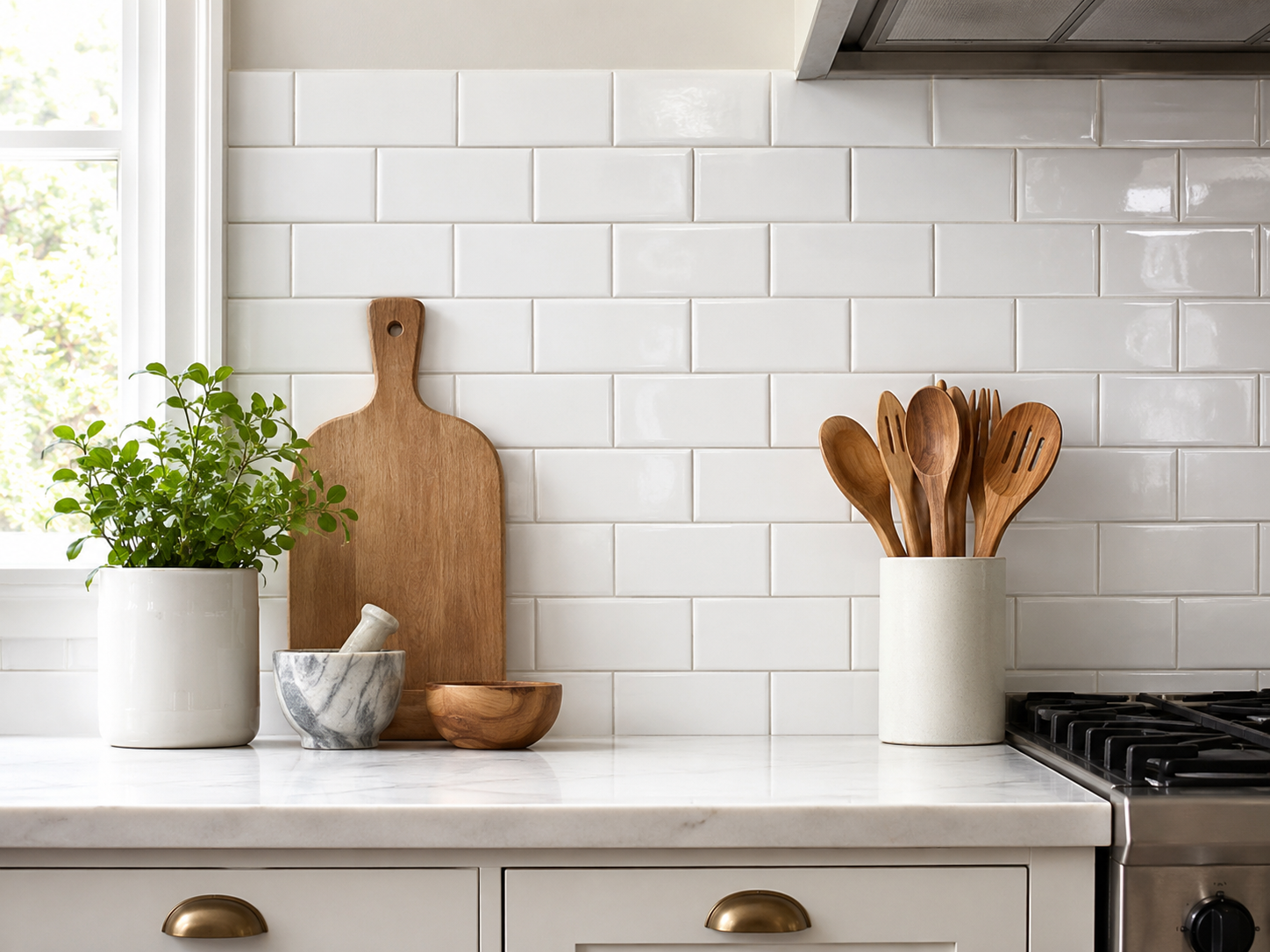
1. Subway Tile
Why It Has Lasted Over 100 Years
Subway tile is still the most commonly installed kitchen backsplash in Ontario. That is not a coincidence. It works in almost every kitchen design and at almost every price point. It also holds up over time in a way that trend-driven options do not.
The rectangular format is simple by design. It does not fight with the rest of the room. Instead, it lets the countertops, the cabinetry, and the hardware do the talking. That simplicity is the reason it works in so many different kitchens.
Layout Options Make a Big Difference
The classic running bond is the standard layout. Each tile is offset by half from the row above. A herringbone layout uses the exact same tile but creates a completely different look. A stacked bond gives you a more modern, graphic result. A vertical stack can make ceiling height feel more generous in a kitchen where walls feel low.
Grout Colour Changes Everything
White subway tile with white grout almost disappears into the wall. The same tile with dark charcoal grout becomes a feature. A warm cream tile with a slightly contrasting grout adds texture without going bold. You are not just choosing a tile. You are choosing a layout and a grout colour that work together to create the finished result.
The standard white 3×6 tile is very common. It appeared in almost every new build and rental renovation in the GTA for over a decade. Better versions are available in slightly larger sizes, with a handmade-look finish, or in warm off-white and cream tones that feel more current.
Subway tile suits traditional, transitional, farmhouse, and contemporary kitchens. Prices start around $2 to $8 per square foot depending on the finish and format.
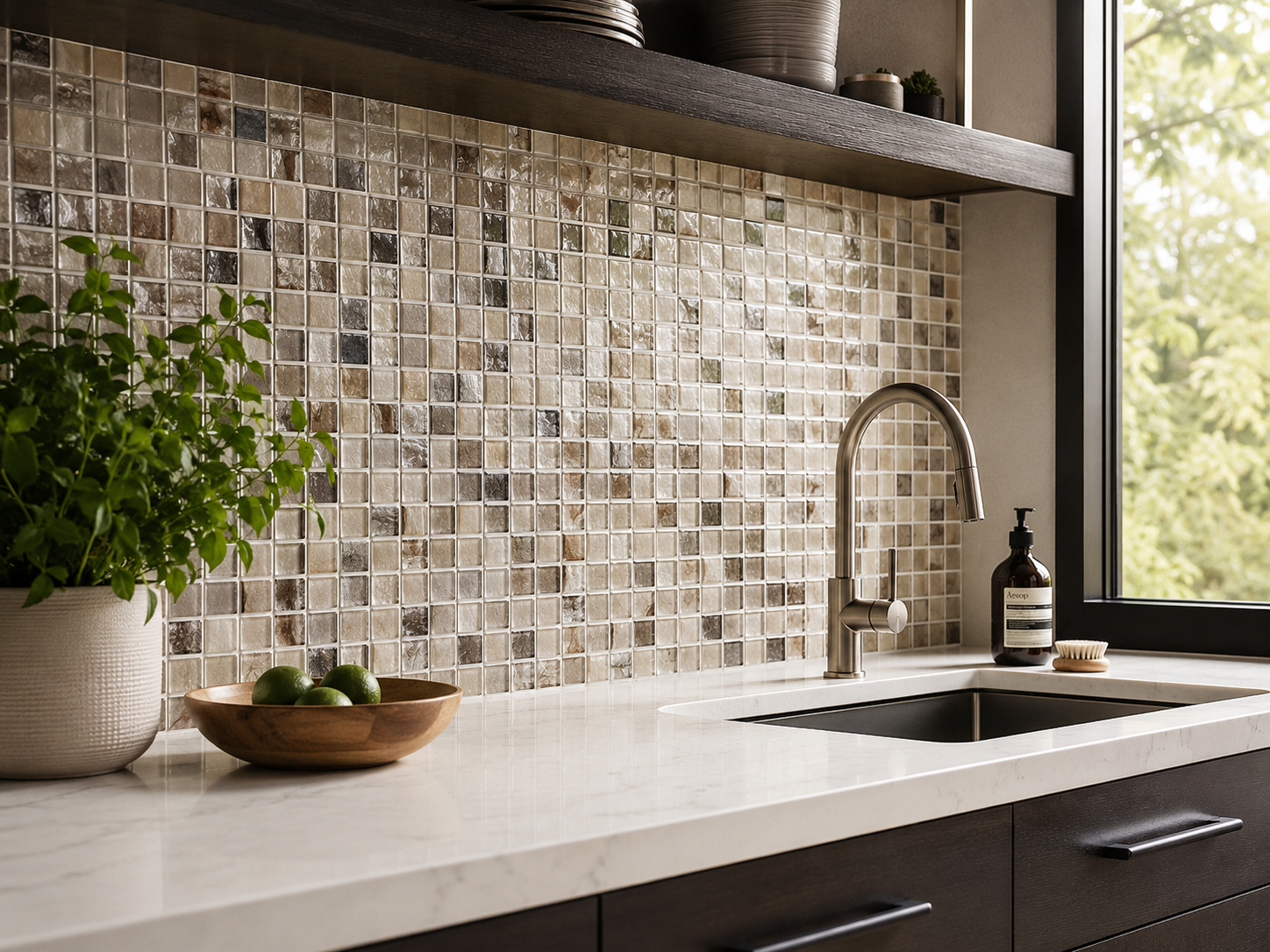
2. Mosaic Tile
The Most Range of Any Backsplash Option
Mosaics come in glass, natural stone, porcelain, ceramic, and metal. They come in small squares, hexagon shapes, irregular pieces, and pre-assembled patterns on mesh backing. No other tile type offers this much variety in one category.
Glass mosaic catches light differently throughout the day. Natural stone brings organic texture and variation. Metal adds an industrial edge that works well with matte black hardware or stainless appliances. Mixed material mosaics create a layered finish that a solid colour tile cannot replicate.
Best Used as a Feature
A bold mosaic behind the range, surrounded by a simpler tile on the rest of the wall, creates a focal point without overwhelming the space. This approach gives your kitchen a clear point of visual interest without covering every surface in something busy.
Installation Takes Skill
Mosaic tiles are small and often come on mesh backing. Grouting requires care to avoid smearing into the tile faces, especially with glass or polished stone. Make sure the installer you hire has specific experience with mosaic work.
Ceramic and porcelain mosaics run around $8 to $15 per square foot. Glass and natural stone mosaics range from $20 to $40. Because most mosaic applications cover a focused area, the total material cost is often lower than it looks at first.
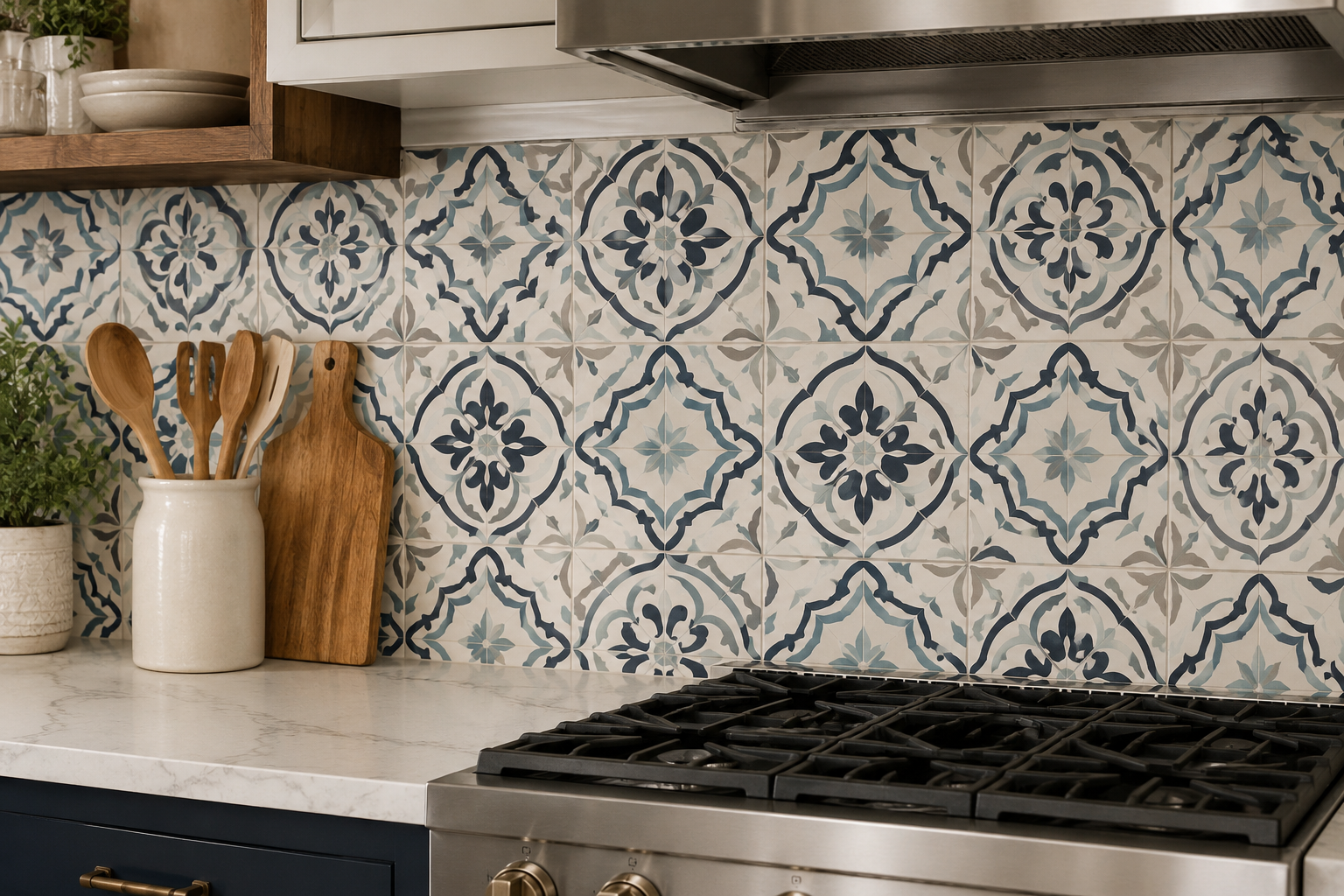
3. Encaustic Tile
A Handcrafted Look Built Into the Material
Encaustic tiles were originally made by hand. Pigments were pressed into clay before firing. Today most encaustic-look tiles are made from porcelain or cement. The handcrafted character is still visible in the surface. There is slight colour variation between tiles. The finish is matte and almost chalky. Patterns feel grounded and warm rather than sharp and digital.
Use It as a Feature, Not a Full Wall
A full wall of encaustic can become overwhelming quickly. A strip across the backsplash, or a focused section behind the range, becomes a design moment without taking over the room. This tile works best when it has space to breathe around it.
Farmhouse kitchens and Mediterranean-influenced spaces are a natural fit. Kitchens with warm wood cabinetry work well too. Encaustic is also showing up more in modern and transitional kitchens as a way to add warmth without going rustic.
Porcelain Versions Are More Practical
Cement-based encaustic tiles need sealing before grouting. They also need resealing every one to two years. Porcelain encaustic-look tiles skip that requirement while keeping the same visual character. For a kitchen backsplash, porcelain is the better call.
Porcelain encaustic runs from $6 to $20 per square foot. Traditional cement encaustic runs from $15 to $40. A single feature strip is often more affordable than it first appears.
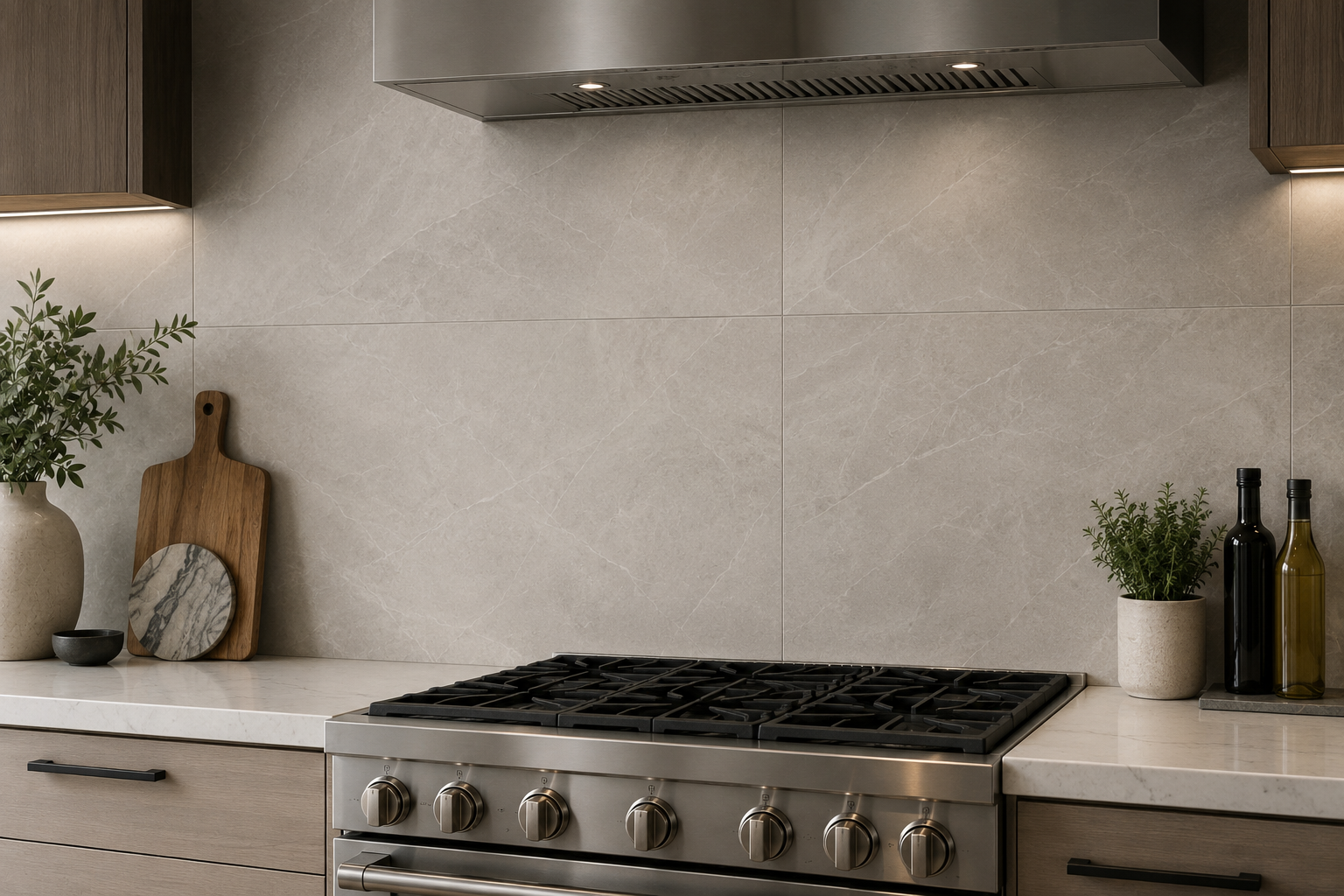
4. Large Format Tile
Fewer Grout Lines, Cleaner Look
Large format tile means tiles 12 inches or larger in at least one dimension. The most common sizes for backsplashes are 12×24, 18×18, and 24×24. The main benefit is fewer grout lines. Fewer grout lines means a cleaner surface and less to maintain over time.
In a modern or transitional kitchen, large format tile can make the backsplash read like a continuous surface. It creates a quiet backdrop that lets the countertops and fixtures do the work. If the rest of your kitchen is already busy visually, this is one of the most effective ways to keep the backsplash from competing with it.
Available in Many Finishes
Large format tiles come in porcelain and ceramic. Finish options range from matte to polished. Marble-effect, concrete-effect, and stone-effect variations bring texture and depth without the maintenance of real natural stone.
Wall Flatness Matters
Larger tiles are less forgiving of uneven walls. A wall that is slightly out of plane creates lippage, where tile edges sit at different heights. This creates both a visual problem and a cleaning challenge. A good installer will check the wall before recommending a size and fix any substrate issues before setting tile.
Materials typically cost $4 to $12 per square foot. Preparation work on an uneven wall can add to the labour cost.
5. Porcelain Slabs
The Most Seamless Result Available
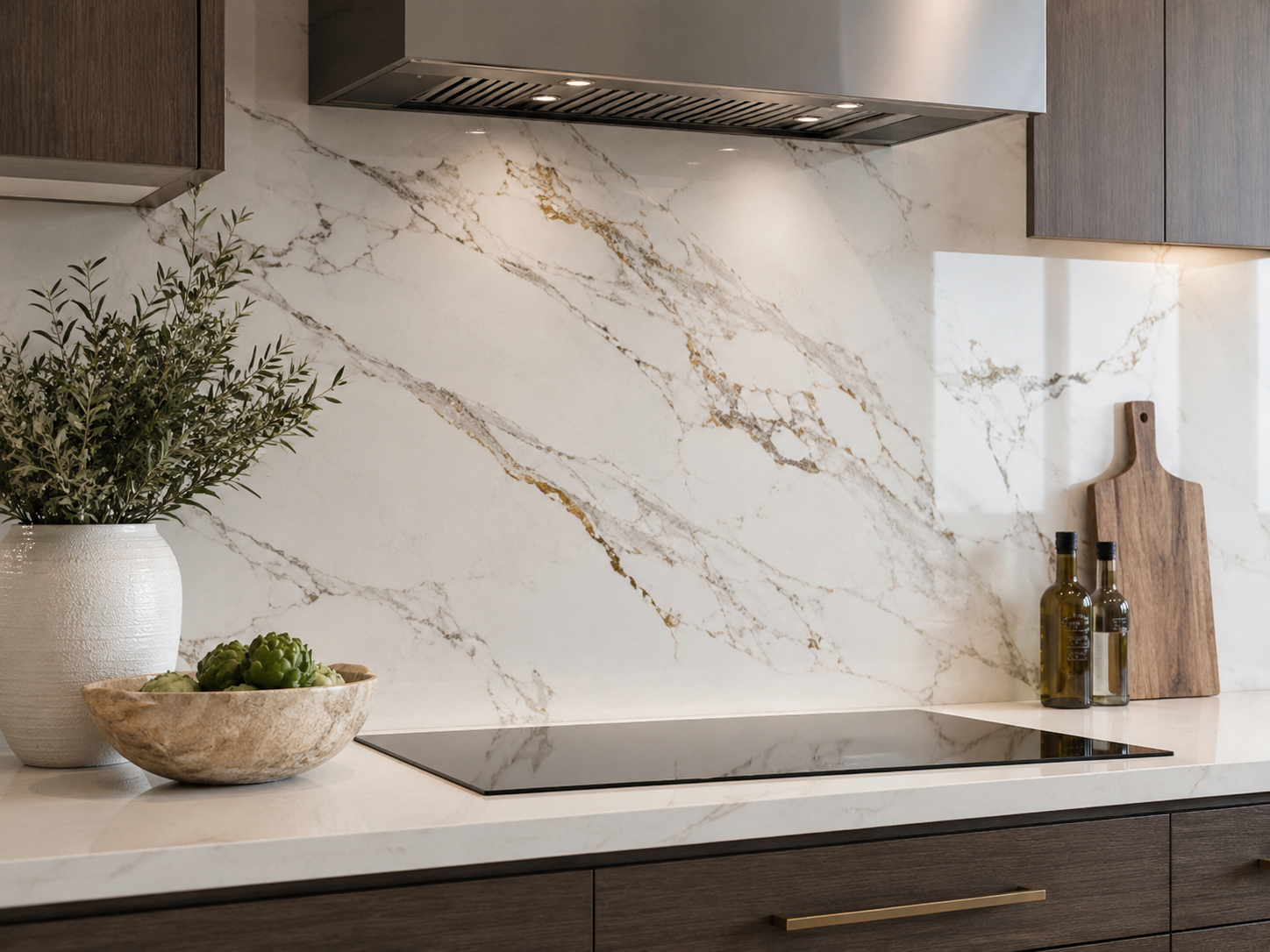
Porcelain slabs run in wide panels, often 48 inches or wider. They can cover the full distance from countertop to upper cabinets in a single piece. There are no horizontal seams, no grout lines, and no visual interruption. The result is one continuous surface.
This option works best when you want everything to read as one unified surface. It pairs naturally with quartz or stone countertops. Veined porcelain slabs that mimic marble can flow from the countertop up the wall in a way that makes the two surfaces look like one material.
Durable and Easy to Maintain
Porcelain slabs are dense and non-porous. They resist staining, moisture, heat, and everyday cooking activity. There is no grout to seal, clean, or replace. Maintenance is minimal compared to almost any other backsplash option.
Installation Requires an Experienced Installer
Panels this size need specialized lifting equipment. Cuts around outlets and windows require precision. A chip or a bad cut in a slab is not the same as replacing one small tile. Choosing the right installer matters more with this option than with any other on this list.
Material costs start around $25 to $35 per square foot. Installation adds $20 to $40 per square foot depending on panel size and complexity. For a full kitchen renovation with a larger budget, slabs are often the right finishing choice for the backsplash.
Conclusion
Every one of these five options can work well in the right kitchen. Subway tile suits kitchens that need flexibility and a timeless look. Mosaics work best when the backsplash needs to be a focal point. Encaustic tile adds warmth and character without a major renovation. Large format tile gives you a clean, low-maintenance surface. Porcelain slabs deliver a seamless, grout-free result.
The right choice depends on your layout, your cooking habits, your cabinetry, and the look you are going for. It also depends on having an installer who can help you choose the right material and execute the job correctly.
At Canadian Tile Pro, we install kitchen backsplashes in Oakville, Burlington, and Mississauga. We guide homeowners through material selection, flag issues before installation starts, and handle the project from start to finish. Ready to get started? Contact Canadian Tile Pro today for a quote.